
The Sydney attack is also the result of the same petro-dollar, Pakistan and Deep State radical narratives.
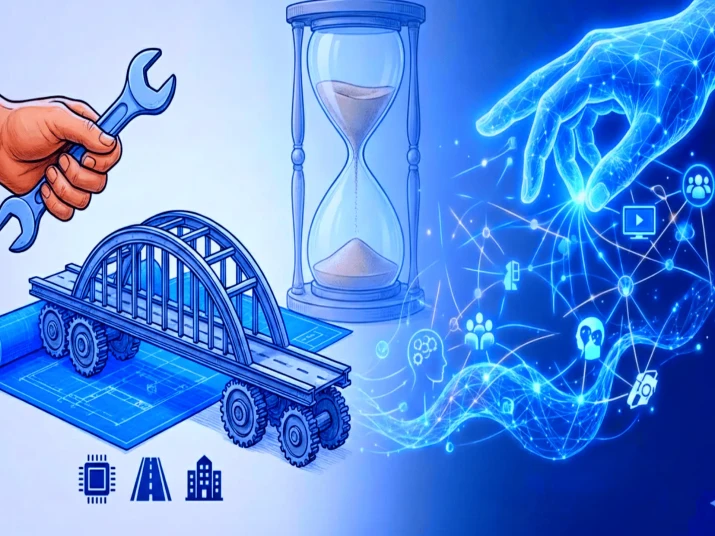
Table of Contents
- The Sydney attack is also the result of the same petro-dollar, Pakistan and Deep State radical narratives.
- Long-term strategy for planned social change: The impact of social engineering
- Education and Entertainment as Instruments of Social Engineering: Assessing Their Role in Long-Term Societal Change?
- Social change through the invisible force of society formation, through the combination of education, public meetings, and cinema
- Crime, Revenge, and State Failure: The Subconscious Influence of Bollywood on Screen Characters
- The portrayal of class and identity in Bollywood and the impact of cinema on the human formation of society
- Bollywood, the underworld, and petro-dollars: A strategy to question the hidden religion and faith of cinema
- Behind the scenes of social engineering through religion, symbols and emotions, the strategy of making Muslims heroes
- A strategy for long-term social change in Bollywood through the combination of life and stories through petro-dollars and the underworld?
- Long-term impact and radicalization of petrodollars and foreign funding on Indian Muslim society?
- Social Engineering in Non-Muslim Society Gradually Spreading Influence Against Money, Ideology, and Culture
- Process of Changing Thoughts through School, Media, and Culture: Planned Social Transformation in Hindu Society
- New strategy of petro-dollar society-building even behind the scenes of Tollygunge movies
- Narrative and social engineering were planned to build society behind the scenes of Tollygunge cinema and entertainment
- The planned impact of misrepresenting and belittling traditional culture through cinema, song, drama, and art
- The trick to belittle the Hindu character by using Durga Puja in the social reality, versus the surprise of the festival
- The reality of rejection of different religious beliefs and economic patronage
The Sydney attack is also the result of the same petro-dollar, Pakistan and Deep State radical narratives.
At least 15 people were killed in a shooting at Bondi Beach in Sydney, Australia, on Sunday. Among the gunmen was Naveed's father, Sajid Akram, who was charged with engaging in acts of terrorism, murder, grievous bodily harm with intent to kill, planting explosives, and using a firearm to cause grievous bodily harm. Indian police officials said Sajid was an Indian citizen. However, after completing his undergraduate degree in Hyderabad, he married a woman of European descent and moved to Australia in November 1998.
Sajid and Naveed visited the Philippines a month before the Sydney attack. Australian security officials said they went to the Philippines to receive military-style training. At that time, Sajid used an Indian passport, and Naveed used an Australian passport. Australian Prime Minister Anthony Albanese said on Tuesday that the attackers were inspired by the "ideology of the Islamic State."
Analysis shows that the same force is behind the terrible terrorist attacks in Sydney. Which brings us to some old and uncomfortable questions. The same ideology, the same network, and surprisingly, the same geopolitical connections over and over again. Which is the triangular relationship of Pakistani links, jihadist ideology, and international economic flows? But they have been deliberately avoiding such international terrorist activities for a long time.
Since World War II, America and the West have reorganized the Middle East not only economically but also ideologically through the petro-dollars of the Gulf countries. Dollars in exchange for oil, weapons in exchange for dollars, and the spread of a certain type of religious group and interpretation under the shadow of weapons and money. This process has gradually sown the seeds of radicalization in the Middle East, Pakistan, and the entire Indian subcontinent.
Pakistan has been used as a frontline state. Sometimes in the name of the anti-Soviet war, sometimes in the name of the war on terror. Sometimes,s to be known as the true propagator of Islam. But the common people, South Asian society, and world security have suffered the consequences. This radicalization has not been limited to madrasas or weapons. It has also penetrated the world of culture, media, and entertainment.
Today, we will discuss another less-discussed effect of the petro-dollar on Bollywood. How a specific political and ideological narrative has gradually entered mainstream cinema through financing, production, story selection,n and character creation. This is not a conspiracy theory. This is a realistic analysis of the interrelationship of economics, politics, and culture.
Long-term strategy for planned social change: The impact of social engineering
What we usually understand by engineering is civil engineering, mechanical engineering, electrical engineering, or computer engineering, etc. These create visible things like roads, bridges, machines, and software. We have heard these concepts a lot through our studies since childhood. But in reality, engineering is not limited to concrete, iron, or code. There are some forms of engineering that are not visible to the human eye but have a very deep impact. That is where social engineering comes in.
Social engineering is a strategy or planned process through which the behavior, thoughts, values, beliefs, mental structure, and social habits of the people of a society, a nation, or a state are gradually changed. This is not a sudden change, but a very subtle and long-term process. Here, nothing is forced on people. Rather, the environment, education, media, culture, and social narrative are created in such a way that people start changing without their knowledge.
This process changes people's behavioral patterns, how they think, what they consider normal, what they question, and what they remain silent about. Gradually, their behavior, social relationships, moral standards, and even what they teach future generations are also affected. In this way, the character of an entire society can change.
A very important thing is that social engineering is not a one-day job. It is not a one-month or one-year project. It is a long-term plan of many years, sometimes decades. It requires continuity, economic power, cultural influence, and presence at the policy-making level. The education system, the entertainment world, the media, religious and social institutions all become part of this process.
If we understand social engineering, we can see many social changes with new eyes. Then we understand that many things are not natural changes, but the result of planned and strategic transformations. And this understanding is the first step in our awareness.
Education and Entertainment as Instruments of Social Engineering: Assessing Their Role in Long-Term Societal Change?
Social engineering basically stands on two main pillars. The first is the education system, and the second is entertainment. It is through these two media that the thinking, values, and moral sense of a society are gradually shaped over a long period of time.
Let us first talk about the education system. The education system does not just teach information, but also determines how people should think, who should be seen as ideals. Which history should be considered as glory? For a long time, in our region, especially in the NCERT (National Council of Educational Research and Training) syllabus, some narratives have dominated. Which have normalized a certain political and ideological perspective. According to many, these textbooks were arranged in such a way under the umbrella of the leftist media and the then Congress government. So that a certain part of history is romanticized, and other parts are hidden or softened.
What has been the result? Today, our subconscious mind has been instilled with the idea that a good ruler must be like Akbar. Yet another aspect of history is that there were widespread killings, looting, and repression during the reign of these rulers. But those aspects have received very little attention in textbooks. Similarly, we have been taught the story of Shah Jahan and the love of the Taj Mahal as an ideal of love and affection. Yet the discussion of the cruelty, violence, and power politics of his reign has been relatively suppressed.
Then comes the second pillar, entertainment. The world of entertainment, including movies, serials, songs, and dance, affects people's emotions the fastest and most deeply. Through entertainment, a character can be made a hero, and even controversial figures in history can be presented as great. By repeatedly showing the same kind of stories, dialogues, and images, a certain idea is "normalized" in people's minds.
The education system creates the mind with logic, and entertainment develops the mind with emotion. The combination of these two makes social engineering the most powerful. And this process continues for decades, not days, until an entire generation begins to accept it as truth.
Social change through the invisible force of society formation, through the combination of education, public meetings, and cinema
The good thing is that after many years, there has been a major change in the NCERT syllabus. We can see an attempt to gradually come out of the one-sided view of history and knowledge that was presented for a long time. Now, through education, there is an opportunity to learn about those who truly gave their lives for the country, who were the builders of society and civilization. At the same time, our ancient religion, culture, tradition, yoga, and Ayurvedic knowledge are gaining new importance in the curriculum. In this way, students will be able to become more aware of their roots, identity, and continuity of civilization.
This makes it clear that the education system itself is a powerful means of social engineering. What will be taught, what will be excluded, which subject will be shown as glory, and which will be left out of the question? Through these decisions, the mindset of a generation is created. Therefore, the education medium is never neutral. It always carries some social and political perspective.
But social engineering is not limited to the education system. Another very important area of it is meetings, processions, public meetings and mass gatherings. Year after year, month after month, the same language, the same slogan. If the same emotion is repeatedly presented to the people, it is possible to gradually bring an entire nation to a certain mental state. In this process, a nation can be put to sleep, and if necessary, a nation can be awakened using the same technique. There are many examples of this in history.
Now, let's come to the world of entertainment, especially the role of Bollywood. For a long time, there have been allegations that a certain section of Bollywood, especially some influential union leaders and ideological groups, has established a certain narrative through cinema. In many films, a particular community has been repeatedly shown as a victim or oppressed. On the other hand, characters from the majority society have been presented in the role of negative or villains. When this image is shown repeatedly, it becomes embedded in the subconscious mind of the viewer as a natural truth.
This whole process is social engineering where education, mass gathering, and entertainment work together. It gradually shapes the thoughts and views of a society. And understanding this reality is the first step to becoming a conscious citizen.
Crime, Revenge, and State Failure: The Subconscious Influence of Bollywood on Screen Characters
Now we will look at an important chapter in Bollywood history. Especially between 1970 and 1982, the type of movies that had the most impact in Bollywood were written by two very influential scriptwriters. This pair was known as Salim and Javed. One is Javed Akhtar, who is now a well-known poet and lyricist and the father of Farhan Akhtar. The other is Salim Khan, the father of Bollywood actor Salman Khan. Together, these two wrote the scripts of about 24-25 successful movies, which changed the course of Bollywood at that time.
The main themes of the movies they wrote were crime, underworld, revenge, angry heroes, and the failure of the state system. The “Angry Young Man” image became popular during this period. These stories not only entertained but also created a certain view of society where the law failed, and the criminal world seemed to be an integral part of reality.
In this context, we must also keep in mind the time. At that time, there were many discussions and allegations about the influence of the underworld in Bollywood. In particular, the name of Dawood Ibrahim has come up many times. His connection with various incidents related to financing, extortion, and production in Bollywood has been mentioned in various investigations and journalistic reports. Although everything in these matters has been proven in court, this influence created a real atmosphere of fear in the Bollywood environment.
And here comes the question of money. According to the allegations, at that time, illegal money from the Middle East, especially from Dubai. Which many refer to as “white-washed money” or the shadow money of petro-dollars, was entering Bollywood. It is said that a part of this money was invested in the film industry through the underworld. This has led to an increase in not only the content of the films but also the creation of hero-villain characters, glamorization of crime, and normalization of violence.
If this whole process is seen from the perspective of social engineering, then it is understood that it is not just about telling stories. It was about gradually shaping the mindset of the people in such a way that crime, underworld, and distrust of the state began to seem “normal”. And through a powerful medium like Bollywood, this influence has been ingrained in the minds of many generations.
The portrayal of class and identity in Bollywood and the impact of cinema on the human formation of society
This time, we will discuss the narrative patterns of the films by the famous scriptwriting duo, Salim Khan and Javed Akhtar. The films they wrote together in the 1970s and 80s were not only commercially successful. They also established a certain perspective on society. According to many analysts, a planned class structure and character-building trend can be seen in the stories of these films.
In this trend, the wealthy or capitalist characters were typically portrayed as the main antagonistic force. They were presented as powerful, exploitative, and morally questionable. These rich characters were often associated with some symbolic features of the majority society, due to which a certain social image was created in the subconscious mind of the viewer. On the other hand, the characters of the working labor class or the common people who worked hard were shown as righteous, oppressed, and morally superior.
Critics claim that these working-class characters are often given minority identities. The structure of the story is arranged in such a way that they are victims of oppression, yet believe in peaceful, tolerant,t and almost angelic behavior. The oppression shown to them is blamed on the powerful capitalist class. As this pattern is repeated over and over, a certain narrative begins to become natural in the mind of the audience.
The important thing here is that these stories do not say anything directly, but say a lot through hints. The fight between the hero and the villain gradually transcends the individual level and becomes a symbol of class and identity. Many interpret this as a form of social engineering, where the audience's thoughts are channeled in a certain direction through emotions and sympathy.
Many also mention the influence of the political environment of the time behind the creation of such narratives. Just as socialist and left-leaning ideas influenced politics during the Congress regime, they also left their mark on the style of storytelling in cinema. Not all movies or all characters fall into this mold, of course, but the main point of this discussion is that if the same kind of narrative continues for a long time, it affects the thinking of society.
Bollywood, the underworld, and petro-dollars: A strategy to question the hidden religion and faith of cinema
To understand the context of Bollywood at that time, one must also remember the power of the underworld at that time. These names, Dawood Ibrahim, Karim Lala, Haji Mastan, were not only in the criminal world. They also came up in discussions within Bollywood. Various investigative reports and journalistic writings have repeatedly revealed that the underworld influenced the film industry at that time. And a large part of the financing came from the Middle East and America, especially Dubai. Many have referred to this money as the shadow money of the petro-dollar. As a result, it was not unusual for the content, character development, and storytelling of the film to reflect the reality of that time.
Against this background, a continuous narrative emerges when looking at Javed Akhtar's individual works. Between 1983 and around 2006, he alone wrote the screenplays of about fourteen films. Most of which, critics believe, follow a similar social and ideological framework. These films often depict a failed state, a society full of injustice, and the protagonist is an angry but morally upright man standing up against that system.
A well-known example of this is the popular film Daan. In this film, Amitabh Bachchan's character is a working-class man growing up in a harsh reality, struggling and angry. Although he comes from a Hindu family, his deep distrust of religious beliefs is shown. In one scene in the film, when his mother brings a puja plate, he rejects it and questions where God was when the injustices were happening. This scene is presented as a symbol of not only personal anger, but also a kind of distrust of religion and tradition.
According to critics, the repeated showing of such scenes and dialogues normalizes a certain idea where religious beliefs are shown as helpless or ineffective, and social struggle is presented as the only just path. Although it does not directly speak against any religion or belief, it creates questions and doubts in the subconscious mind of the viewer.
From this perspective, Bollywood at that time was not just a medium of entertainment. Rather, the influence of the underworld, economic reality, and ideological narrative. The combination of all these things made it a powerful platform for social engineering. And that influence remains in the memories and mindset of many people even today.
Behind the scenes of social engineering through religion, symbols and emotions, the strategy of making Muslims heroes
They want to explain how the movie uses scenes, symbols and dialogues. Through which a specific message is embedded in the mind of the audience. Surely you can understand that they are promoting a particular nation.
Then there are some symbolic scenes in the movie that give a deep message without saying anything directly. In the story, a character who is shown as a Rahim Chacha type is seen. The hero is given a special bangle or bracelet. The symbolic importance of a specific number is attached to that bangle. The audience is made to understand that there is special significance behind this number, although that explanation is never stated openly. But curiosity and belief are created through hints.
Then a stronger visual message is given that the hero survives even though he is shot twice because of that bangle. That is, this symbolic object protects him. At the same time, it is indicated that praying to God in the temple does not save one. But if that symbolic bracelet is present, life is saved. This message is gradually established throughout the film, which beliefs are effective and which are ineffective.
This type of narrative is not limited to just one film. It is seen in many other films as well. Scenes are repeatedly shown where all desires are fulfilled by tying a thread in a mosque or performing certain religious rituals. In examples like the popular film Ajrangi Bhaijaan, this emotional presentation directs the sympathy and faith of the audience in a specific direction.
Also, the names of some films themselves carry a direct message. For example, Ram Teri Ganga Maili, a symbolic statement is given through this name, which creates a certain idea of religion, holiness and social reality in the mind of the audience. The name, story and scene all work together to create a subtext.
It is not necessary to go into detail here about the personal identities or pasts of those who acted in these films. The real point is how these films have affected the mental structure of the audience by using symbols, emotions and visual language. Without saying anything directly, a certain social and ideological narrative has gradually been normalized.
This is the work of social engineering, where cinema is not just entertainment. Rather, it becomes a powerful medium for forming thoughts. By reading and understanding these, one can understand how these messages have been spread within society for a long time.
A strategy for long-term social change in Bollywood through the combination of life and stories through petro-dollars and the underworld?
Many have heard the name of Gulshan Kumar, while many do not. This generation may not know him. Gulshan Kumar was known for his television series Karanadhar, devotional songs, and religious songs. His films and works were made around piety, devotion, and religious emotions. He tried to make a special impact on the faith and mentality of the audience.
But the reality of Bollywood at that time was different. Big names of the underworld, including Dawood Ibrahim and Haji Mastan, were entering Bollywood and spreading their influence. Various investigative reports have revealed that the film industry was funded through financing from Dubai or shadow money from petro-dollars. In this place, the situation became difficult for artists like Gulshan Kumar. He never surrendered himself to this powerful network. This is precisely why there was pressure and threats from them, and this reality affected him in various ways.
The victim who has recently come into discussion is Sushant Singh Rajput. His sister said in an interview that towards the end, Sushant used to repeatedly say, “They will not save me, they will not save me.” This statement shows how the powerful underworld, finance, and influence within Bollywood can limit the freedom and security of an artist.
This incident is not just a problem of personal life. It shows that Bollywood, cinema, and television are not just a medium of entertainment. For a long time, the mentality of the audience and society has been gradually influenced through the characters of artists, the themes of the films, and the stories. Just as religious or devotional films affect the emotions and beliefs of the audience. Similarly, crime, thriller, or social narrative films instill a specific message in the thoughts of the audience.
The main thing is that all this pressure worked more clearly on those who stood for their own morality, beliefs, or independence, like Gulshan Kumar or Sushant Singh. And this kind of message and narrative has been slowly spreading in the minds of the audience over the long term. Bollywood is not just a place for entertainment. It has also been used as a powerful medium of social engineering, where the lives and stories of the artists are combined to influence society.
Long-term impact and radicalization of petrodollars and foreign funding on Indian Muslim society?
So let me tell you something here, which you should listen to carefully. I also said in the video that I said how petrodollars have been used to drive radicalization in India and the subcontinent. Let me explain again, which started after 1970-71. The Gulf countries, that is, the Middle Eastern countries, funded through these petrodollars, basically did two things in India.
One was to influence Indian Muslims. Those whom they were trying to bring to hardline religious practices were gradually radicalized. Scholarships, training, and sending them were all used for this work. In this way, local influence was created. They were sent to learn, then they returned and influenced the people of their own areas. In this way, some communities were gradually becoming radicalized.
The second task was to influence outside India. Those who were radicalized were sometimes connected to international networks. That is, not only religious consciousness, but also political and social influence was created. This made it possible to create networks in different parts of society in the long run and spread certain doctrines.
I said in the video that the purpose of this whole process was to gradually guide the minds of the people in a certain direction. Local schools or religious training centers, scholarships, and training were all were a planned strategy. In this way, they influenced the new generation. Gradually, beliefs, practices, and behavior within a community changed.
This is not a one-day or one-month task. This is a long-term plan, carried out for almost a decade. This kind of influence started to be created among Indian Muslims after 1971, and this is a big role of petrodollars.
So you understand how an entire community can be gradually radicalized through social and religious practices using money and foreign funding. This also shows that money and influence can be used not only in business or politics, but also to shape social consciousness.
Social Engineering in Non-Muslim Society Gradually Spreading Influence Against Money, Ideology, and Culture
This time, the Zeta is on this side, that is, the non-Muslims. Among non-Muslims, we are Hindus in the majority. Apart from this, there are also the numerologists of Sattika, like Buddhists, Jains, and Ashikas. They are mentioned as separate numerologists in the dictionary of West Bengal. But the main thing is the influence that has been spread on us Hindus. It has been done with petrodollar funding. Through this funding, an attempt has been made to make us secular gradually and take us towards Islamization.
So, how is secularization made? The communists, who have put up hoardings, have helped here. They say that we are fighting against communism, that is, capitalism. But in reality, there is another work going on behind this hoarding. And that other work is. To insult, neglect, belittle our religion, culture, tradition, and core ideology.
In this process, they are slowly influencing our generation. Through schools, colleges, universities, media, everything, we are being trained in such a way that we start questioning our own culture, our own religious values. They want our thinking and mentality to change. When we see that our religious practices are old or irrelevant, we will lean towards secular or Western standards.
This message is being conveyed repeatedly through school curricula, literature, movies, songs, plays, everything. As a result, a narrative is being created among the new generation, where they start considering their own religious consciousness and culture as small or inferior. And only then are people mentally prepared for Islamization being created.
This is the whole plan, gradually, in a long-term manner. This is not a one-day or one-month task. The whole process aims to influence the Hindu community in such a way that they lose faith in their own culture and religion. And at the same time, the external money and networks that exist, such as the Gulf's petrodollars, strengthen this influence.
So you understand how, with the help of petrodollars, media, and communists, our culture and religious consciousness are gradually being humiliated and influencing the new generation. The whole process is long-term, systematic, and planned.
Process of Changing Thoughts through School, Media, and Culture: Planned Social Transformation in Hindu Society
Social change in Hindu society often occurs slowly but steadily. However, in the modern era, it has been possible to accelerate this change in a planned manner through schools, media, and cultural media. The influence of the education system, media, and culture combine to have a significant impact on the thoughts and values of the people of the society.
School education develops knowledge, the concept of equality, and rational thinking in the new generation. For example, in Hindu society, instead of traditional beliefs and superstitions, scientific perspectives and human values are given importance through contemporary education. As the curriculum includes religious education, moral education, and social awareness, students learn to think outside the traditional thinking. As a result, ideas related to women's education, caste, deprivation, and social discrimination see the face of change.
The media also play an important role in social transformation. New ideas and social policies are propagated in Hindu society through newspapers, television, film,s and social media. For example, the contribution of media in raising awareness about women's empowerment, ending child labour, and poverty alleviation is immense. Throughthe media, people can easily adopt global thinking, modern lifestyle, and human rights concepts.
Culture is also a powerful tool for changing thinking. Drama, songs, dance, and literature convey moral and social messages to society. In Hindu society, the influence of culture is immense in challenging old superstitions and customs and establishing new moral and social standards. For example, through cinema or drama, society becomes aware of women's freedom, the importance of education,n and social equality.
Overall, it can be said that the combined influence of school, media, and culture is essential in implementing the planned social transformation in Hindu society. The foundation of thought is laid through school education, the media disseminates ideas quickly and widely, and culture brings about changes at the mental and moral level. In this way, society gradually becomes more liberal, believes in equality, and is progressive.
New strategy of petro-dollar society-building even behind the scenes of Tollygunge movies
Now comes our beloved Tollygunge industry. So, what is happening in this Tollygunge industry? They are taking forward the work that Bollywood has been doing for so long. Because we know that a large part of the Tollygunge industry is run by communist influence. Some are directly involved, some may not be involved, but everything is being run because of that influence. I will say again and again that this is not just a small or irrelevant incident; it is a big problem.
What are they doing? This kind of work started in the 1960s and 1970s; it has been going on forever. But now it seems that the scale of this process has increased. Now it is being focused on more. In the dictionary of West Bengal, the communities which are small in terms of numbers, how much they are victims, how humiliated or oppressed, that message is being shown repeatedly in almost every movie.
To give an example, suppose a movie is released. A police officer character is seen in the movie. If that police officer belongs to that particular community, then he is shown to be the most honest, the most loyal. But his life is filled with hardship, poverty and struggle. That is, the narrative is being repeatedly instilled in the mind of the audience that the people of this community are not rich or powerful; they are exploited, humiliated and the most righteous.
In addition, a kind of systematic message is given through the story, dialogues and characterization of the movie. This is not just a storytelling act; it is social engineering. The mentality of the audience is gradually developed. Where they will see one community as compassionate, righteous and innocent, and a certain idea will be formed about the other community.
Just as the same process was once observed in Bollywood works, Tollygunge is also following that path. That message is being given repeatedly in movies, songs, and plays. And through this process, the mentality, ideas and concepts of the audience in the new generation are being gradually influenced.
So it can be understood that Tollygunge is not just a place for entertainment; It is a powerful medium, where influence is being exerted on different communities of society through movies and stories.
Narrative and social engineering were planned to build society behind the scenes of Tollygunge cinema and entertainment
A movie has been released, which shows how a person from that particular community is living in extreme poverty. Society and Hindus are collectively humiliating, insulting, and torturing him. That person has reached a situation where he cannot find any other way out, and in the end, he is forced to take an extreme step himself. He kidnaps a child and takes scriptures in his hands. Because he believes that there is no other way out, society must punish him. Every scene of the movie repeatedly shows how oppressed and how exploited that person is.
Let me explain with another example: the plot of the entire movie is created by solving the mystery by placing only four chairs at the beginning of the movie. There, one character is shown as a Hindu with a tilak. Another person is identified as a smart boy with or without a topi. Who is shown as a special community? This message is repeatedly given throughout the film that no matter how good the Hindu character may be, he is shown to be small, humiliated, and lowly.
In every scene, the Hindu character is subjected to some kind of humiliation by his local community or society. The audience repeatedly sees how the society, family,y or the larger section of people are suppressing and oppressing him. And at that time, the boy or character of a particular community is always presented as honest, intelligent, and righteous. That is, the entire production of the film gives a specific message of showing a community as criminal, inadequate, or lowly, and showing another community as virtuous and righteous.
Thus, the film of Tollygunge or any other film industry is not just a medium of entertainment. Every story, characterization, and dialogue of the film all spread a planned social message. A specific impact is repeatedly created in the brain of the audience. The new generation, who grow up watching films, accept such messages and are gradually formed in a certain trend of society.
Such a planned presentation of the film is social engineering. The consciousness, values, and mentality of society are gradually being influenced by every character, every scene, and every dialogue in the movie.
The planned impact of misrepresenting and belittling traditional culture through cinema, song, drama, and art
Today, some singers, whose songs we spend our hard-earned money listening to, are making a living by selling songs. But the songs of many of these singers are being performed these days in such a way that the original melody, the gamut, which originated from the Vedas, the ancient Vedas, are being completely misrepresented. On the one hand, they are insulting our Hindu religion, our traditional religion, on stage. They do not know or do not try to know that the origin of all that art, dance, song, and screenplay is Sanatan Dharma.
We look at today's cinema world, television, screenplays, and dance music. But our culture is being gradually changed. Those who are presenting our culture through cinema, song, or drama. They often show traditional religion as just a "Bengali art". In fact, the main meaning of Sanatan Dharma is eternal, which is scriptural and has no end. But today, instead of that eternity, we see only a temporary, semi-Bengali presentation of culture, which insults the main meaning.
In this way, everything about the Sanatan culture is being used to control the cinema, songs, and entertainment media. Our ancient art, music, dance, and everything is now being presented in such a way that the audience will think that they are just a part of entertainment. But in reality, there is a deep message behind it to belittle, insult, and distract the new generation from its importance.
Finally, it must be said that in Bollywood these days, due to this process, respect for Sanatan culture is gradually decreasing. This message is being spread repeatedly through cinema, songs, and stage performances. That our ancient culture, Hinduism, and Sanatan education have no value. In this way, the entire entertainment world is being used to influence the audience's mentality from a certain point of view.
Due to the impact of this process, our new generation may not understand. In fact, how deep is the real value of Sanatan Dharma and culture? Today, this work of Bollywood has put our culture in danger.
The trick to belittle the Hindu character by using Durga Puja in the social reality, versus the surprise of the festival
Do you know what the most interesting thing is now? This industry, say Tollygunge, say movies, say serials, but everyone is using Durga Puja in parallel. Because quite simply, such a big business cannot be built around the festival of another community. Apart from Durga Puja, there is no festival in this state around which such a big economy, such a big industry, such a big market is created.
Durga Puja means joy, festival, dance, and song. Women are adorned from head to toe in ornaments, sarees, jewelry, shaj-goz, food and drinks, pandals, decorations, lights, dhak, dhol, everything is a huge festival.
Who brings all this? Who runs this economy? Who runs the economy? Religion runs it. Which other religion? Our religion. How does it run? With a temple-centred economy since ancient times. I will say this again and again, because it is proven in every case, and it is happening even today.
Therefore, Durga Puja must be used. Because it is not possible to show the dhaak-dhol, so much ornamentation, so much joy, so many visuals using the festivals of other communities. Therefore, Durga Puja will be used completely. But the interesting thing is that even if Maa Durga is used, the children of Maa Durga, that is, we, will always be shown as small. In the story, in the characters, in the dialogues, in the messages everywhere.
On the one hand, the business of the industry will continue with the visuals, lights, songs, dances of the puja; on the other hand, in the same movie or serial, the Hindu character will be shown as a villain, narrow-minded, oppressor, backward. And in reality, in how many villages Durga Puja is being stopped, in how many places puja is not being held due to oppression, these truths will not be shown anywhere. They will not be said, they will not be shown.
This hypocrisy is going on day after day. The economy of religion will be used, but religion will not be respected. Culture will be used, but the people of that culture will be neglected.
Still, I believe that this darkness of Tollygunge will be dispelled very soon. Slowly, people are understanding, asking questions. And once people wake up, all this hypocrisy will not last long; it cannot happen.
The reality of rejection of different religious beliefs and economic patronage
Festive joy vs. commercial interests: Dualism affecting the Hindu community
We have talked about Durga Puja so far, but other puja festivals also have a huge economic impact. The puja, festival, dance, song, food, decoration, all take place during this time, and the economy reaches its peak. However, the interesting thing is that the Muslim community in India earns a lot of money during this puja festival. This is a big opportunity for them in terms of business and commerce; they earn a huge amount of money.
On the other hand, they do not believe in those festivals. Hindu puja, rituals, and customs are unacceptable to them. They never accept puja or festival as part of their religion or culture. In many cases, they break Hindu idols, disrespect the rituals and ceremonies of puja. In this process, it is often seen that this business money is earned almost with the help of ‘petro dollars’, that is, through external funds or influence.
Another noteworthy thing is that even though they do business during Hindu festivals, they do not allow them to earn money during their own mahfils or other religious events. Rather, they obstruct, neglect, and even try to destroy or loot Hindu businesses. That is, on the one hand, they use Hindu festivals for business purposes. On the other hand, they do not allow business opportunities during their own festivals or festivals.
This hypocrisy proves that they are using the festivals of a particular community for personal gain. But the mentality of controlling or harming the culture or business of other communities is also at work there. They are using the opportunity for economic gain in any way, but they do not respect moral or religious values.
As a result, the festivals and economy of the Hindu community are being used repeatedly, and respect for culture is being reduced among the new generation. The joy of festivals, economic development, and business profits are all being used for different purposes.
As a result of this process, the balance of society is being disturbed, and the Hindu community has to be careful about its festivals and culture. This cycle of dualism and economic control continues today and is affecting new generations.
Tags
For Add Review. You Need To Login First Login Page

-
LATEST
-
POPULAR

What is marriage according to Sanatan Dharma and why is marriage called a bond of birth and rebirth?
The Sydney attack is also the result of the same petro-dollar, Pakistan and Deep State radical narratives.
Comments
No comments yet